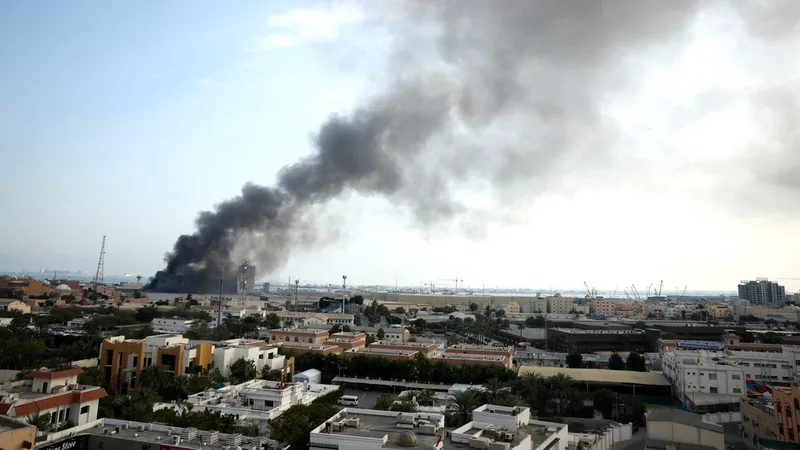
El medio MeidasTouch publicó el 22 de octubre imágenes que revelan los daños significativos que sufrieron bases militares estadounidenses en Oriente Medio alcanzadas por los ataques de represalia lanzados por Irán durante la fase activa del conflicto, incluida la instalación aérea de Muwaffaq Salti en Jordania y Camp Buehring en Kuwait. Testimonios recabados entre militares afectados describen una situación crítica en las bases afectadas. NEW: U.S. troops, contractors and military families say the damage to American bases in the Iran war is far worse than the Pentagon has disclosed, according to accounts and images published by MeidasTouch. The outlet says it obtained dozens of unpublished photos and videos from bases in Saudi Arabia, Jordan, Kuwait, the UAE and Bahrain.
They show destroyed barracks, dining halls and aircraft, including a damaged AWACS surveillance plane at Prince Sultan Air Base. Sources said three service members were killed in a July missile strike on barracks at a base in Jordan. In Bahrain, military families say the Pentagon blocked a planned evacuation, leaving some to escape on their own. “It’s so much worse than people realize,” one source said. Sources spoke anonymously, saying they had been threatened with disciplinary action.
MeidasTouch said some claims, including the loss of a C-17 cargo plane, could not be independently verified, and the Pentagon has not confirmed several of the reported losses. — Clash Report (@clashreport) October 22, 2026 Testimonios bajo amenaza MeidasTouch, en coordinación con VALOR Media Network, obtuvo decenas de fotos y de videos inéditos que documentan daños en instalaciones militares estadounidenses en Arabia Saudita, Jordania, Kuwait, Emiratos Árabes Unidos y Baréin . Los testimonios recogidos describen aeronaves destruidas , instalaciones bombardeadas, tropas cavando refugios y familias militares que huyen del peligro en estacionamientos durante los ataques con misiles. 🚨🇺🇸🇮🇷 Troops and military families leak photos of burned aircraft, bombed barracks and self-dug foxholes from the Iran war, and say the Pentagon threatened them for sharing any of it The images come through MeidasTouch and VALOR Media from anonymous service members, contractors and spouses. What they describe, base by base: -Prince Sultan, Saudi Arabia: dining halls, workspaces and dorms destroyed; an AWACS and two KC-135 tankers damaged in one strike that reportedly injured 10 to 12; bunkers delivered with no doors; a photo sources say is a destroyed C-17 that the Pentagon has never acknowledged -Muwaffaq Salti, Jordan: three months of incoming so frequent the alarms couldn't keep up; F-15s, F-35s and Reapers damaged; a ballistic missile got past interceptors and hit barracks on July 17, killing three, with troops saying they heard the wounded calling from inside the flames; housing hit twice; troops told they were going home, then ordered to stay after throwing out their bedding -Camp Buehring, Kuwait: some troops lived out of a van in the desert for three months; September photos show the camp nearly abandoned -UAE: no warning the war was starting, no shelters, only security teams armed; troops hid in hotels ordering takeout or dug their own foxholes; leadership described as "rudderless" -Bahrain: Fifth Fleet headquarters damaged; families say evacuation planes were waiting but the Pentagon refused because it would "look bad at home," then the airport was hit; some paid tens of thousands to escape, hid in a mall parking garage, or were housed in residential buildings that were struck within hours; senior leaders reportedly flown out under cover of a "training exercise" -Across the force: no embedded press, rumors of year-plus extensions, troops saying they learned the war began from the news and don't know what they're fighting for The Pentagon’s latest number to Congress is $43.6 billion for the war, $45.1 billion with fuel, and base damage still isn’t in it. The people who lived in those bases just filled in the blank, and the strike plan for November expects them to do it again.
Source: @MeidasTouch / Writer: Daniel — Mario Nawfal (@MarioNawfal) October 22, 2026 "Es mucho peor de lo que la gente se imagina", afirmó una fuente. Estos testimonios fueron proporcionados bajo condición de anonimato, debido a las amenazas de acciones disciplinarias por compartir información o imágenes. Bases bajo fuego constante En la Base Aérea Príncipe Sultán, en Arabia Saudita , las imágenes muestran comedores, espacios de trabajo y dormitorios dañados entre marzo y julio. Videos obtenidos evidencian tanto interceptaciones exitosas como fallos de los sistemas de defensa antimisiles . 🚨 NEAR MISS: Never-before-seen footage of a missile attack on a U.S. base in the United Arab Emirates shows a missile striking just meters away from American personnel caught out in the open.
From our earlier reporting (link in reply). @ValorMediaNet @Team_Harbaugh https://t.co/B9cbmktoCa — MeidasTouch (@MeidasTouch) October 22, 2026 La situación en la Base Aérea Muwaffaq Salti, en Jordania , fue particularmente crítica. Los militares reportaron cerca de tres meses de fuego entrante casi constante desde marzo, con alarmas incapaces de seguir el ritmo de los ataques. Numerosas aeronaves estadounidenses resultaron dañadas , incluidos cazas F-15 , F-35, drones MQ-9 Reaper , así como infraestructura crítica. Teherán expone el truco lingüístico detrás de "conflicto iraní" Fuentes relatan que oyeron llamados de auxilio de compañeros atrapados en las llamas , a los que no pudieron rescatar por falta de preparación.
En medio de los ataques, militares murieron al no poder llegar a los refugios a tiempo. La base estaba superpoblada y las tropas se quedaron repetidamente sin suministros básicos, especialmente artículos de higiene. Abandono y caos logístico En Kuwait , tras los ataques iniciales, algunos militares se dispersaron en el desierto y sobrevivieron en una camioneta durante tres meses. Fotos obtenidas en septiembre en Camp Buehring muestran una base prácticamente abandonada.
En Emiratos Árabes Unidos , los uniformados no recibieron advertencia alguna antes del inicio de las hostilidades, ni contaban con refugios. Algunos se ocultaron en hoteles buscando comida, mientras otros cavaron trincheras improvisadas. Las fuentes describieron el liderazgo como "sin rumbo" . INTERCEPTORS FAIL: Terrifying footage from July shows U.S. troops racing for cover at Jebel Ali in the United Arab Emirates as an Iranian missile evades air defenses and strikes dangerously close to American personnel. @ValorMediaNet @Team_Harbaugh https://t.co/2WZJMo85Ch — MeidasTouch (@MeidasTouch) October 22, 2026 🚨 NEAR MISS: Never-before-seen footage of a missile attack on a U.S. base in the United Arab Emirates shows a missile striking just meters away from American personnel caught out in the open.
From our earlier reporting (link in reply). @ValorMediaNet @Team_Harbaugh https://t.co/B9cbmktoCa — MeidasTouch (@MeidasTouch) October 22, 2026 Familias abandonadas en Baréin Los relatos más dolorosos provienen de Baréin , sede de la Quinta Flota de la Marina estadounidense. A pesar de que los comandantes locales tenían planes de evacuación tras los ataques de junio de 2025, el Pentágono, supuestamente, rechazó autorizar la evacuación porque "haría que la situación se viera mal en casa". Posteriormente, el aeropuerto fue atacado y cerrado. MeidasTouch have published photos of the destruction of American aircrafts, bombed-out barracks and equipment, in Saudi Arabia, Jordan, Kuwait, United Arab Emirates, and Bahrain.
Photos were shared by American personnel who were present at those bases. https://t.co/m4ARymvEhn — Seyyed Amir (@AmirJ3193) October 23, 2026 Las familias tuvieron que afrontar la evacuación por sus propios medios. Algunas pagaron decenas de miles de dólares para escapar, abandonando pertenencias y sin saber si volverían a ver a sus cónyuges. Durante los ataques iniciales, hubo familias que se refugiaron durante horas en estacionamientos . Las fuentes afirman que algunos altos mandos fueron evacuados bajo la cobertura de "ejercicios de entrenamiento" y pudieron advertir a sus familias, mientras que otras permanecieron bajo ataque durante más de una semana.